The End of the Biological Binary
🐭🐭
Then last year in June a team in China announced they had been somewhat successful in doing the same, but with two mice dads!
I wanted to learn more. I'm gay and have considered adoption at some points in life, but this was more intriguing. The more I thought about it, the more I wanted to learn. So here we are after a little research. It's early days and there is more to discover, learn and adjust before my guy and I would be able to take advantage. Realistically, it likely won't happen to us, but nevertheless it's exciting and the hope it offers is immense for us in the LGBTQ+ community.
🌈 Click the cards below for a more detailed look into these breakthroughs. The mice fathers and mice babies running around were designed, illustrated and animated by me in Procreate, by hand.
🧪 The Science
- The Biological Two-Parent Limitation: For millions of years, mammalian reproduction has followed a non-negotiable process.
かぐや姫の物語
How Japan Bypassed the Sperm Requirement (2004–2009)
In 2004, a pioneering team led by Tomohiro Kono at Tokyo University of Agriculture was able to create an itty bitty mammal with two biological mothers: A tiny baby mouse named Kaguya [かぐや]. 4 They bypassed the sperm limitation by combining a mature egg with an immature, unmethylated egg from a newborn mouse. Basically they tricked an egg, chemically, into perceiving the second egg was a sperm, which in turn allowed it to begin fertilization. 4,5 Like ... what?!
[The mouse was named after the "Moon-born princess" from a Japanese folk tale who was discovered as a baby inside a bamboo stalk - an appropriate tribute to a creature born of an unconventional, sperm-less origin.]
In short, the egg was tricked by scientists altering and introducing a nonbinary "egg-sperm" (that's my silly terminology), and a baby was conceived. Kaguya survived to adulthood, mated as usual and gave birth to healthy offspring naturally, proving that bimaternal life is not only possible, but also fully functional. Kono's follow-up reviews confirmed that oocyte growth-dependent progression of maternal imprints is the primary roadblock that naturally prevents parthenogenesis in mammals. 8,9
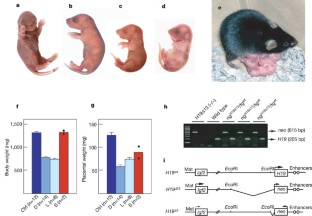
In his 2010 study published in Human Reproduction, Kono and Kawahara's team revealed that bimaternal (BM) mice live up to one-third longer. 7,8 On average, these fatherless mice lived 841.5 days, compared to just 655.5 days for conventionally bred control mice. 10 The long-lived bimaternal pups were significantly smaller and lighter when they grew up, while showing enhanced immune systems coupled with a surprising increase in protective white blood cells called eosinophils. Turns out shutting off one particular set of genes on a particular chromosome is likely the cause of these benefits.
🧬 2 Dads Conceive
While bimaternal mice have been studied since 2004 3,11, the bipaternal frontier remained elusive in reproductive science, until China answered the call. Last year in June 2025, building on the gene-editing tools and "epigenetic reprogramming" logic used in previous studies, two teams rebalanced the DNA from two fathers so it could function like an egg, but in two distinct and opposite ways. This was an immense hurdle because sperm and eggs have vastly different epigenetic "memories."
As has been noted, some lower vertebrates have the ability to spontaneously produce healthy bimaternal offspring. Spontaneous bipaternal offspring have never been observed in any vertebrate, especially not mammals. There was a long winding road to success, so the teams began with tackling a variety of gene edits. Because paternal sperm DNA is packed with aggressive growth-promoting genes, "two-dad" embryos naturally self-destruct in the womb.
Here is how the two teams solved this imprinting barrier using completely opposite tools:
1. The Beijing/Guangzhou Team (The Chinese Academy of Sciences) 12
- Foundation: Permanent genetic alterations using CRISPR Cas9.
- Method: Using cultured androgenetic haploid embryonic stem cells (ahESCs) derived from sperm (not live embryos). Because haploid cells only have one copy of DNA, they are incredibly easy to edit using CRISPR-Cas9

- Steps: They permanently sliced out DNA sequence segments, introduced frameshift mutations, and knocked out regulatory elements across 20 key imprinted regions.
- They knocked out 18 regions to cure lethal overgrowth (babies too big to survive), swollen tongues (babies could not breathe|suckle), and fluid buildup in tissues (edema).
WARNING ⚠ The video from the lab might be a little shocking, it's one of the newborns having difficulty breathing: Video S1. Bi-paternal mouse that exhibited severe respiratory issues, related to Figure 1
This video is not shocking and shows an altered newborn able to feed: Video S2. Artificial feeding of newborn 18KO-pup, related to Figure 1


2. The Shanghai Team (Shanghai Jiao Tong University) 13
- Foundation: Epigenetic procedure that allowed chemicals to attach to the genes instead of permanently altering them.
- Method: They bypassed stem cells and permanent DNA deletions entirely. By surgically injecting two normal sperm heads (from C57BL/6 and CAST mouse strains to allow allele-specific targeting using natural genetic variations) directly into an enucleated (DNA-less) egg cell.
- Steps: They co-injected CRISPR-based epigenetic editing tools (dCas9-Tet1 to erase methyl tags and dCpf1-Dnmt3 to write them). Without cutting a single piece of DNA, they chemically overlaid genetic maternal instructions onto seven critical imprinting control regions (ICRs): Igf2-H19, Dlk1-Dio3, Igf2r, Snrpn, Kcnq1ot1, Grb10, and Nespas.
-
Outcome: Because no physical genes were deleted, the father's genetic sequence remained 100% healthy and intact. When the two surviving Shanghai bi-paternal pups reached adulthood (out of hundreds), meiosis proceeded perfectly normally without any genetic shuffling errors. Both adult males were fully fertile, naturally mating with females and fathering healthy, normal offspring of their own.

- So, they essentially took natural 2 sperm heads from a specific lineage of mouse which was close to ‘normal’. With the sperm heads, they introduced a modified form of CRISPR Cas9, which coats genes with particular chemical instructions on specific areas of DNA. This caused the sperm-egg and the natural sperm to both be tricked in different ways into a binary situation which caused fertilization to occur in a handful of oocytes.
It is important to note that the success rate remains low, and the process is technically exhaustive. However, the Shanghai results were undeniable: the offspring were not only healthy but were themselves fertile and capable of having their own babies. This proved that with enough genetic "reprogramming," the requirement for a maternal genome could also be bypassed.
🧩 Societal Effects
🏳️🌈Hopes🏳️⚧️
From Lab Mice to Queer Familes?
The sociopolitical implications of this research are profound, particularly for the LGBTQ+ community, of which I am a part. For cis and trans folks alike, this science suggests a future where biological relatedness is no longer dictated by traditional sex roles.
"Let’s be real—this isn’t about mice. It’s about vision. For gay couples, especially men, the idea of having genetically related children has long been a pipe dream outside of surrogacy and egg donation. This research pushes the needle toward a future where biological parenthood doesn’t require a mom and a dad, just a whole lot of science and the willingness to reimagine what family looks like.
"2Despite the excitement, we must remain grounded. This is early-stage science performed in mice. Translating these results to humans would require overcoming massive technical and ethical hurdles, and currently, any such process would still require egg donors and surrogates to carry the pregnancy.
Beyond my community, what this means for people having to live with genetic disorders is another blessing entirely. The side effects, the errors and successes, the new found knowledge together form a bright light shining on the path to conquering some of the things that ail us.
I'd like to take a moment to acknowledge and honor the tiny lives affected by this research. I learned that not only were babies created that either died quickly, died a bit after birth and/or were subjected to awful experiences, but also the horrific fact that some of the mothers were actually killed while being studied.
I have no easy answers and it's a knife's edge: damned if you do damned if you don't. It makes me wonder if 'hell' is actually a soul who did terrible wrong and who resulted in being born into one of these excruciating situations (example: a helpless fetus with a large tongue who can barely breathe for the first and last few days of its little life)... having to live these situations over and over again.
Until a more powerful entity helps them out of it. By entity I could mean The Creator, God|dess, I could mean the indifferent Universe, I could mean a large human with more knowledge and power than the wisdom to know how to wield it. A soul at the mercy of more powerful beings.
The final, and following, info card touches on the spirituality of Mouse Nation and how cultures viewed mice around the world.
🐭 People of the Mouse Nation
I love the North American Indigenous view of “other-than-human persons”: wildlife/spirits/natural elements (Irving Hallowell, "Ojibwa Ontology, Behavior, and World View"). They each are part of a nation. All nations are autonomous and sovereign in their territories, with their own laws and languages. All of whom interact as social beings with moral agency and intent. As far as wildlife are concerned, this is how I would like to acknowledge them.
Mouse People are no exception. They are usually tiny, yet carry the heavy weight of spiritual significance. Scientifically, their bodies are built in ways that match their magickal reputation. Continuous growing teeth mean they are able to gnaw through obstacles, flexible skeletons let them squeeze through tiny gaps, hyper-sensitive whiskers navigate pitch darkness, and a rapid metabolism keeps them moving with a quickness. Special species take this even further: The African Spiny Mouse (Acomys) can completely heal its skin without scarring, or the Grasshopper Mouse (Onychomys), who stands on its hind legs to howl at the night sky while eating poisonous scorpions.
In indigenous traditions across North America, the mouse is a brave underdog, a hero, and a quiet problem-solver. Plains stories tell of Jumping Mouse, who sacrificed her sight and smell to help other animals before being transformed into an Eagle. Other legends show mice sneaking past guards to steal fire for their shivering communities. It was also a mouse who bravely volunteered to go up high in the sky, away from the safety of the ground, avoided being burned as they ran up to an ensnared Sun... his small, sharp teeth gnawed through cosmic snares that were trapping the Sun, freed it and allowed the plants to grow once more. Another tiny mouse stood up to Buffalo and won, despite the enormous difference in size and strength between the two... only to end up too greedy and losing to Fox.
Across Africa and Asia, mice are viewed as messengers, fortune-bringers, and spiritual guides. In West Africa, the Baule people place field mice inside special wooden vessels so their movement of grain-sticks can reveal hidden truths from the spirits below. In Hindu traditions, the elephant-headed remover of obstacles Ganesha rides Mushaka the mouse as his vāhana, showing how wisdom can master uncontrolled desire, uncontrolled thoughts.
Mouse People remind us that we are capable of overcoming our extremes by taking grasp of the reins, climbing on their backs and taking control of our selfishness and gluttony. Other times they offer wisdom and ask us to learn from them. Small and fast enough to find hidden ways forward quickly, to conquer brutes of great size and strength... while at the same time not giving up and persevering through hardships… sometimes slowing down and patiently gnawing their way through a barrier, bite by bite, freeing the sun.
📚Primary Source List
-
Jackson, Justin. "Mice born of two dads reveal hidden details of mammalian reproduction." Phys.org, June 25, 2025.
URL: Phys.org Article
Summary: This news report describes a massive success where scientists in Shanghai created healthy, adult mice using the DNA of two fathers. By using CRISPR to edit seven key chemical areas on the sperm DNA, the resulting adult male mice grew normally and were fully fertile
Johnson, Michael. "Gay Dads of the Lab World." ThePinkTimes.com July 1, 2025. Updated Jul 22, 2026.
-
URL: The Pink Times
-
Summary: This article discusses the social impact of the same-sex mouse studies for queer folks. It highlights how these genetic breakthroughs could eventually make it possible for queer or same-sex couples to have children that share both parents' DNA, offering hopes for the future of LGBTQ+ families.
Kono, Tomohiro et. al. "Birth of parthenogenetic mice that can develop to adulthood." Nature 428, no. 6985 (April 22): 860–864.
URL: Nature 2004 Paper
Summary: This is the historic study that announced the birth of Kaguya, the first adult-surviving mouse born without any father. The researchers achieved this by combining egg cells and deleting a specific gene area to trick the embryo into growing.
Kono, Tomohiro. “Genetic modification for bimaternal embryo development”. Reproduction Fertility and Development 21, 31–36.
Summary: Review paper by the scientist who created Kaguya. It explains the biology behind why mammalian egg cells cannot naturally develop into embryos on their own and details the exact genetic edits needed to bypass this barrier.
Kawahara Manabu, Kono Tomohiro. “Longevity in mice without a father”, Human Reproduction, Volume 25, Issue 2, February 2010, Pages 457–461
URL: Longevity Study 2010
Summary: Another study by Dr Kono, with Dr Kwahara, focusing on longevity in mice having to do with genes from mothers. Genetics derived from mothers causes mice to live longer, have higher resistance to disease with more protective cells throughout the body, and a sleek lightweight body morphology.
Normile, Dennis. "Fatherless mice live longer." Science.org, December 2, 2009.
URL: Science.Org Article
Summary: This article reports on the discovery by Kono et. al. that female mice made from two mothers and no father live about 30% longer than wild type mice. It suggests that genes from the father's sperm might actually have a negative effect on how long mammals live and how strong their immune systems are.
Odom, Laura. "You (Don't) Got Male: Parthenogenesis and its Applications in Biomedical Research." Lions Talk Science, September 4, 2024.
Summary: A Science Communication Blog by the Graduate Students of Penn State College of Medicine. Some animals, like the Komodo Dragon, can have babies without needing a father. While mammals cannot do this naturally because of chemical tags on their DNA, scientists have used gene editing to create "fatherless" mice in the lab, which might help us make better stem cells for medicine.
Scimex. 2025. "The first mouse with 2 dads to survive to adulthood." Scimex: The Science Media Exchange, January 28, 2025.
URL: Scimex Media Release
Summary: This is a science media announcement that shares the news of the Chinese Academy of Sciences' successful creation of the first-ever adult mice born from two male parents.
Wikipedia contributors. "Genomic imprinting." Wikipedia, The Free Encyclopedia. Last modified June 8, 2026.
Summary: This page explains genomic imprinting, which is when certain genes are turned on or off depending on whether they came from the mother or the father. It talks about how this works through chemical changes in the cell, and how mistakes in this process can cause growth and developmental disorders in humans.
Wikipedia contributors. "Kaguya (mouse)." Wikipedia, The Free Encyclopedia. Last modified June 17, 2026.
Summary: This article tells the story of Kaguya, the first mouse created in a lab using the DNA of two mothers and no father. It details how the scientists made Kaguya, the health differences between her and normal mice, and how she was eventually able to have her own babies naturally.
Zhi-Kun Li et. al. "Generation of Bimaternal and Bipaternal Mice from Hypomethylated Haploid ESCs with Imprinting Region Deletions." Cell Stem Cell 23, no. 5 (November 1): 665–676.
Summary: This study shows how researchers used special stem cells that naturally lose their chemical imprints in the lab. By deleting three key gene areas in female stem cells, they made healthy mice with two mothers, and by deleting seven areas in male stem cells, they made the first mice with two fathers (though the two-father mice died shortly after birth).
Zhi-kun Li et. al. "Adult bi-paternal offspring generated through direct modification of imprinted genes in mammals." Cell Stem Cell 32 (January 28).
Summary: Study from China explains how scientists successfully made mice with two fathers survive all the way to adulthood. By making 20 different genetic changes in male stem cells, they fixed severe growth defects, allowed the pups to nurse, and even let them develop healthy, working placentas.
Wei Yanchan et. al. "Fertile androgenetic mice generated by targeted epigenetic editing of imprinting control regions" Proc. Natl. Acad. Sci. U.S.A. 122 (27) e2425307122, (2025).
Summary: A paper in PNAS (Proceedings of the National Academy of Sciences) by Yanchan Wei et. al. in which they explain how they avoided damaging and permanently altering male DNA in sperm (causing sterility), and instead used a modified CRISPR to cover the DNA to make it look/feel like an oocyte, preserving the DNA instead.
El fin del binario biológico
🐭🐭
Pero el año pasado, en junio, un equipo en China anunció que le había ido súper bien haciendo lo mismo, ¡pero con dos papás ratones!
¡Uff, me dieron muchísimas ganas de saber más! Yo soy gay y he pensado en la adopción en varios momentos de mi vida, pero esto me pareció una chimba. Entre más lo pensaba, más quería saber. Así que aquí estamos tras investigar un poquito. Todavía falta mucho por descubrir, aprender y ajustar antes de que mi pareja y yo podamos aprovecharlo. Siento que siendo realistas de pronto no nos toque a nosotros, pero igual es súper emocionante y la esperanza que nos da a la comunidad LGBTQ+ es enorme.
🌈 Haz clic en las tarjetas de abajo para ver más a fondo estos avances. Los papás ratones y los bebés que andan corriendo por ahí los diseñé, ilustré y animé yo mismo en Procreate, a mano.
🧪 La ciencia
- La limitación biológica de dos progenitores: Durante millones de años, la reproducción de los mamíferos ha seguido un proceso que no se negocia.
かぐや姫の物語
Cómo Japón se saltó el requisito del esperma (2004–2009)
En 2004, un equipo súper teso liderado por Tomohiro Kono en la Universidad de Agricultura de Tokio logró crear un mamífero chiquitico con dos mamás biológicas: Una ratoncita bebé diminuta llamada Kaguya [かぐや]. 4 Ellos se saltaron la barrera del espermatozoide combinando un óvulo maduro con un óvulo inmaduro y sin metilar de una ratona recién nacida. Básicamente engañaron químicamente a un óvulo para que creyera que el segundo óvulo era un espermatozoide, lo que a su vez permitió empezar la fecundación. 4,5 O sea... ¡¿que qué?!
[A la ratonita le pusieron así por la "princesa nacida de la luna" de un cuento folclórico japonés a la que encontraron de bebé dentro de un tallo de bambú; un homenaje perfecto para una criaturita nacida de un origen tan loco y sin esperma.]
En resumen, los científicos trampearon al óvulo alterando e introduciendo un "óvulo-esperma" no binario (esa es mi forma boba de llamarlo), y se concibió un bebé. Kaguya sobrevivió hasta la adultez, se apareó normalito y dio a luz a crías sanas de forma natural, demostrando que la vida bimaterna no solo es posible, sino que funciona a la perfección. Los estudios posteriores de Kono confirmaron que la progresión de la impronta materna dependiente del crecimiento del oocito es el principal obstáculo que evita naturalmente la partenogénesis en los mamíferos. 8,9
En su estudio de 2010 publicado en Human Reproduction, el equipo de Kono y Kawahara reveló que las ratonas bimaternas (BM) viven hasta un tercio más. 7,8 En promedio, estas ratonitas sin papá vivieron 841.5 días, comparado con solo 655.5 días de las ratonas del grupo de control criadas de forma tradicional. 10 Las crías bimaternas longevas eran harto más pequeñas y livianas al crecer, pero tenían un sistema inmune fortalecido junto con un aumento sorprendente de glóbulos blancos protectores llamados eosinófilos. Resulta que apagar un grupo particular de genes en un cromosoma específico parece ser la causa de semejantes beneficios.
🧬 2 papás conciben
Aunque a las ratonas bimaternas las vienen estudiando desde 2004 3,11
, el tema de tener dos papás seguía siendo un misterio inalcanzable en la ciencia reproductiva... ¡hasta que China le entró al chicharrón! El año pasado, en junio de 2025, usando herramientas de edición genética y la lógica de la "reprogramación epigenética" de investigaciones previas, dos equipos reequilibraron el ADN de dos papás para que funcionara como un óvulo, pero de dos formas súper distintas y opuestas. Esto era un reto gigantesco porque el esperma y los óvulos tienen "memorias" epigenéticas totalmente diferentes.Como ya hemos visto, algunos vertebrados inferiores tienen la capacidad de producir crías bimaternas sanas de forma espontánea. La reproducción bipaterna espontánea jamás se ha visto en ningún vertebrado, y mucho menos en mamíferos. El camino al éxito fue largo y lleno de curvas, así que los equipos empezaron a probar varias ediciones genéticas. Como el ADN del esperma paterno viene lleno de genes de crecimiento hiperagresivos, los embriones de "dos papás" se autodestruyen en el vientre de manera natural.
Así fue como los dos equipos superaron esta barrera de la impronta usando herramientas totalmente opuestas:
1. El equipo de Pekín/Guangzhou (La Academia China de Ciencias) 12
- Base: Alteraciones genéticas permanentes usando CRISPR Cas9.
- Método: Usar células madre embrionarias haploides androgenéticas (ahESC) cultivadas a partir de esperma (no de embriones vivos). Como las células haploides solo tienen una copia de ADN, son tiradas de editar con CRISPR-Cas9.
-
Pasos: Cortaron de forma permanente segmentos de secuencia de ADN, metieron mutaciones de desfase de lectura y desactivaron elementos reguladores a lo largo de 20 regiones clave con impronta.
- Desactivaron 18 regiones para corregir el sobrecrecimiento letal (bebés demasiado grandes para sobrevivir), lenguas inflamadas (no podían ni respirar ni mamar) y acumulación de líquidos en tejidos (edema).
Pilas ⚠ El video del laboratorio puede ser un poquito duro, es uno de los recién nacidos teniendo problemas para respirar: Video S1. Ratón bipaterno que mostró problemas respiratorios graves, relacionado con la Figura 1 - Desactivaron una 19.ª región (el locus Blcap-Nnat) para arreglar los párpados abiertos y un problema grave al amamantarse, logrando que las siguientes crías pudieran lactar por sí solas.
Este video no es tan fuerte y muestra a un recién nacido modificado que puede alimentarse: Video S2. Alimentación artificial de la cría 18KO recién nacida, relacionado con la Figura 1 - Desactivaron una 20.ª región (el cúmulo de microARN Sfmbt2, borrando 72 miARN) para corregir fallos placentarios graves, lo que permitió que los siguientes embriones desarrollaran sus propias placentas funcionales.
-
Efectos secundarios: Sin la intervención, los genes masculinos de las crías quedaban hiperrepresentados y sin nada que los frenara. O sea que nacían con defectos físicos muy severos como los mencionados arriba, y otros de plano ni salían del vientre. Como el equipo alteró los genes permanentemente, cuando los ratones adultos con dos papás empezaron a producir esperma vía meiosis, los cromosomas editados se mezclaron al azar como siempre, pero con efectos secundarios re graves. Esa lotería meiótica produjo más de 4.000 combinaciones genéticas distintas en su esperma. Y como un futuro embrión necesita que las 20 ediciones funcionen al unísono, la receta mágica se rompió, dejando a estos ratones adultos con dos papás completamente estériles. Además sufrieron una vida más corta (60.1% de lo normal).
2. El equipo de Shanghái (Universidad Jiao Tong de Shanghái) 13
-
Base: Procedimiento epigenético que permitió que ciertos químicos se pegaran a los genes en vez de alterarlos para siempre.
- Método: Se saltaron por completo las células madre y los cortes permanentes de ADN. Inyectaron quirúrgicamente dos cabezas de espermatozoide normales (de cepas de ratón C57BL/6 y CAST para permitir la marcación de alelos específicos usando variaciones genéticas naturales) directamente en un óvulo enucleado (sin ADN).<
- Pasos: Inyectaron al tiempo herramientas de edición epigenética basadas en CRISPR (dCas9-Tet1 para borrar marcas de metilo y dCpf1-Dnmt3 para escribirlas). Sin cortar ni un solo pedazo de ADN, le superpusieron químicamente instrucciones genéticas maternas a siete regiones de control de impronta críticas (ICR): Igf2-H19, Dlk1-Dio3, Igf2r, Snrpn, Kcnq1ot1, Grb10 y Nespas.
-
Resultado: Como no se borró ningún gen físicamente, la secuencia genética del papá se mantuvo 100% sana e intacta. Cuando los dos ratoncitos de Shanghái con dos papás que sobrevivieron llegaron a la adultez (de cientos de intentos), la meiosis funcionó sobre ruedas sin errores de mezcla genética. Ambos machos adultos resultaron ser re fértiles, se aparearon de forma natural con hembras y tuvieron crías sanas y normales.
- O sea que, en pocas palabras, cogieron 2 cabezas de esperma naturales de una línea de ratones bastante 'normal'. Junto con las cabezas de esperma, metieron una forma modificada de CRISPR Cas9 que recubre los genes con instrucciones químicas específicas en zonas puntuales del ADN. Esto hizo que tanto el esperma-óvulo como el esperma natural se dejaran engañar de distintas formas en una situación binaria, logrando que la fecundación se diera en un puñado de oocitos.
Hay que tener en cuenta que la tasa de éxito sigue siendo bajita y el proceso es técnicamente agotador. Sin embargo, lo de Shanghái fue incontestable: la cría no solo nació sana, sino que era fértil y capaz de tener sus propios bebés. Esto demostró que con suficiente "reprogramación" genética, la necesidad de un genoma materno también se puede esquivar.
🧩 Impacto en la sociedad
🏳️🌈Esperanzas🏳️⚧️
¿De ratones de laboratorio a familias queer?
Las implicaciones sociopolíticas de este estudio son profundas, sobre todo para la comunidad LGBTQ+, de la cual hago parte. Tanto para personas cis como trans, esta ciencia apunta a un futuro donde el vínculo biológico ya no dependa de los roles sexuales tradicionales.
"Seamos sinceros: esto no es solo por los ratones. Es por la visión. Para parejas gay, sobre todo de hombres, la idea de tener hijos con su propio ADN ha sido un sueño lejano sin recurrir a la gestación subrogada o a la donación de óvulos. Esta investigación nos acerca a un futuro donde la paternidad biológica no necesite un papá y una mamá, sino un montón de ciencia y las ganas de reimaginar cómo se ve una familia.
"2Pero bueno, con todo el entusiasmo, hay que tener los pies en la tierra. Esto es ciencia en etapa súper inicial hecha en ratones. Pasar esto a humanos implicaría superar retos técnicos y éticos gigantescos, y por ahora, cualquier proceso requeriría donantes de óvulos y vientres de alquiler para llevar el embarazo.
Más allá de mi comunidad, lo que esto significa para las personas que viven con enfermedades genéticas es otra bendición enorme. Los efectos secundarios, los aciertos y desaciertos, y todo este nuevo conocimiento juntos son una luz gigante en el camino para vencer muchas de las dolencias que nos aquejan.
Quiero tomarme un momento para reconocer y honrar las pequeñitas vidas impactadas por esta investigación. Me enteré de que no solo se crearon bebés que murieron rapidito, o al poco tiempo de nacer, o pasaron por experiencias horribles, sino también del hecho espantoso de que algunas madres fueron sacrificadas mientras las estudiaban.
No tengo respuestas fáciles y esto es un dilema ético durísimo: malo si sí, malo si no. Me pone a pensar si de pronto el 'infierno' es en verdad el alma de alguien que hizo algo terrible y termina naciendo en una de estas situaciones desgarradoras (por ejemplo, un feto indefenso con la lengua gigante que casi ni puede respirar en sus primeros y últimos días de vida)... teniendo que repetir esa angustia una y otra vez.
Hasta que un ser más poderoso lo saque de ahí. Y por ser me refiero al Creador, a Dios/Diosa, al Universo indiferente, o a un humano gigante con más conocimiento y poder que sabiduría para manejarlo. Un alma a la merced de seres más poderosos.
La última tarjeta informativa habla sobre la espiritualidad de la Nación Ratón y de cómo distintas culturas han visto a los ratones alrededor del mundo.
🐭 La gente de la Nación Ratón
A mí me encanta la visión indígena norteamericana sobre las "personas no humanas": la vida silvestre, los espíritus y elementos de la naturaleza (Irving Hallowell, "Ojibwa Ontology, Behavior, and World View"). Cada uno hace parte de una nación. Todas las naciones son autónomas y soberanas en sus territorios, con sus propias leyes e idiomas. Todos interactúan como seres sociales con libre albedrío e intención. Y en cuanto a los animales, así es como me gustaría rendirles tributo.
La Gente Ratón no es la excepción. Por lo general son diminutos, pero llevan a cuestas un significado espiritual grandísimo. Desde la ciencia, sus cuerpos están hechos a la medida de su reputación mágica. Sus dientes de crecimiento continuo les permiten roer cualquier obstáculo, sus esqueletos flexibles les dejan escurrirse por rendijas mínimas, sus bigotes supersensibles los guían en la más densa oscuridad y un metabolismo volado los mantiene moviéndose a mil. Hay especies especiales que van más allá: el ratón espinoso africano (Acomys) puede regenerar su piel por completo sin dejar cicatriz, o el ratón saltamontes (Onychomys), que se para en sus patas traseras para aullar a la noche estrellada mientras se come escorpiones venenosos.
En las tradiciones indígenas de Norteamérica, el ratón es el valiente que nadie da un peso por él, un héroe y un solucionador silencioso. Las historias de las Grandes Llanuras hablan del Ratón Saltador, que sacrificó su vista y su olfato para ayudar a otros animales antes de convertirse en un Águila. Otras leyendas muestran a ratones colándose entre los guardias para robarse el fuego para sus comunidades heladas de frío. También fue un ratoncito el que se ofreció valientemente a subir a lo más alto del cielo, dejando la seguridad del suelo, esquivando quemarse mientras corría hacia un Sol atrapado... sus dientes pequeños y afilados royeron las trampas cósmicas que apresaban al Sol, lo liberaron y permitieron que las plantas volvieran a crecer. Otro ratoncito le plantó cara al Búfalo y le ganó, a pesar de la diferencia abismal de tamaño y fuerza entre los dos... solo para terminar de ambicioso y perder contra el Zorro.
En África y Asia, a los ratones los ven como mensajeros, traedores de buena suerte y guías espirituales. En África Occidental, el pueblo Baule pone ratones de campo dentro de recipientes de madera especiales para que al mover unos palitos de grano revelen verdades ocultas del mundo espiritual. En la tradición hindú, el dios con cabeza de elefante Ganesha, el destructor de obstáculos, monta el ratón Mushaka como su vāhana, demostrando cómo la sabiduría puede dominar el deseo descontrolado y los pensamientos desbocados.
La Gente Ratón nos recuerda que somos capaces de superar nuestros extremos tomando las riendas, montándonos en su lomo y tomando el control de nuestro egoísmo y glotonería. En otras ocasiones nos regalan sabiduría y nos piden que aprendamos de ellos. Tan chiquitos y ágiles para encontrar atajos escondidos, para vencer a grandulones de enorme fuerza... y al mismo tiempo sin rendirse jamás, dándole la cara a la adversidad... a veces desacelerando y royendo pacientemente los obstáculos, mordisco a mordisco, hasta liberar al sol.
📚Lista de fuentes primarias
-
Jackson, Justin. "Ratones nacidos de dos papás revelan detalles ocultos de la reproducción en mamíferos." Phys.org, 25 de junio de 2025.
URL: Artículo de Phys.org
Resumen: Este reporte de noticias describe un éxito rotundo donde científicos en Shanghái crearon ratones adultos y sanos usando el ADN de dos papás. Al usar CRISPR para editar siete zonas químicas clave en el ADN del esperma, los ratones machos adultos resultantes crecieron con normalidad y fueron totalmente fértiles
Johnson, Michael. "Papás gay del mundo de los laboratorios." ThePinkTimes.com 1 de julio de 2025. Actualizado el 22 de julio de 2026.
-
URL: The Pink Times
-
Resumen: Este artículo habla del impacto social de los estudios de ratones del mismo sexo para la gente queer. Destaca cómo estos avances genéticos podrían permitir en un futuro que parejas queer o del mismo sexo tengan hijos compartiendo el ADN de ambos padres, trayendo mucha esperanza para las familias LGBTQ+.
Kono, Tomohiro et al. "Nacimiento de ratones partenogenéticos capaces de llegar a la adultez." Nature 428, n.º 6985 (22 de abril): 860–864.
Resumen: Este es el estudio histórico que anunció el nacimiento de Kaguya, la primera ratona que sobrevivió hasta la adultez habiendo nacido sin ningún papá. Los investigadores lo lograron combinando óvulos y borrando una zona genética específica para engañar al embrión y hacerlo crecer.
Kono, Tomohiro. “Modificación genética para el desarrollo embrionario bimaterno”. Reproduction Fertility and Development 21, 31–36.
Resumen: Artículo de revisión hecho por el científico que creó a Kaguya. Explica la biología de por qué los óvulos de mamíferos no se pueden convertir en embriones por sí solos de forma natural y detalla las ediciones genéticas exactas para saltarse esta barrera.
Kawahara Manabu, Kono Tomohiro. “Longevidad en ratones sin padre”, Human Reproduction, Volumen 25, Entrega 2, febrero de 2010, Páginas 457–461
Resumen: Otro estudio del Dr. Kono, junto con el Dr. Kawahara, enfocado en la longevidad de los ratones relacionada con los genes maternos. La genética heredada de las mamás hace que vivan más tiempo, tengan mayor resistencia a enfermedades con más células protectoras por todo el cuerpo, y un cuerpo más estilizado y liviano.
Normile, Dennis. "Los ratones sin padre viven más tiempo." Science.org, 2 de diciembre de 2009.
Resumen: Este artículo reporta el hallazgo de Kono et al., según el cual las ratonas criadas con dos mamás y sin papá viven un 30% más que las ratonas normales. Sugiere que los genes del esperma paterno en verdad podrían tener un efecto negativo en la esperanza de vida de los mamíferos y en qué tan fuerte es su sistema inmune.
Odom, Laura. "You (Don't) Got Male: La partenogénesis y sus aplicaciones en la investigación biomédica." Lions Talk Science, 4 de septiembre de 2024.
Resumen: Un blog de divulgación científica escrito por estudiantes de posgrado de la Facultad de Medicina de Penn State. Algunos animales, como el dragón de Komodo, pueden tener crías sin necesidad de un padre. Aunque los mamíferos no lo pueden hacer de forma natural por etiquetas químicas en su ADN, los científicos han usado edición genética para crear ratones "sin papá" en laboratorio, lo cual podría servir para producir mejores células madre en la medicina.
Scimex. 2025. "El primer ratón con 2 papás en sobrevivir a la adultez." Scimex: The Science Media Exchange, 28 de enero de 2025.
Resumen: Este es un anuncio científico que comparte la noticia del logro de la Academia China de Ciencias al crear los primeritos ratones adultos nacidos de dos padres machos.
Colaboradores de Wikipedia. "La impronta genómica." Wikipedia, la enciclopedia libre. Última modificación el 8 de junio de 2026.
Resumen: Esta página explica la impronta genómica, que es cuando ciertos genes se activan o desactivan dependiendo de si vinieron de la mamá o del papá. Habla de cómo funciona esto a través de cambios químicos en la célula y cómo los errores en este proceso causan trastornos de crecimiento y desarrollo en humanos.
Colaboradores de Wikipedia. "Kaguya (ratona)." Wikipedia, la enciclopedia libre. Última modificación el 17 de junio de 2026.
Resumen: Este artículo cuenta la historia de Kaguya, la primera ratona creada en laboratorio usando el ADN de dos mamás y ningún papá. Detalla cómo la lograron crear, las diferencias de salud entre ella y las ratonas normales, y cómo con el tiempo logró tener sus propios bebés de forma natural.
Zhi-Kun Li et al. "Generación de ratones bimaternos y bipaternos a partir de ESCs haploides hipometiladas con deleciones en regiones de impronta." Cell Stem Cell 23, n.º 5 (1 de noviembre): 665–676.
Resumen: Este estudio muestra cómo investigadores usaron células madre especiales que pierden de forma natural sus marcas químicas en laboratorio. Borrando tres zonas genéticas clave en células madre hembras, crearon ratones sanos con dos mamás, y borrando siete zonas en células madre machos, crearon los primeros ratones con dos papás (aunque los ratones de dos papás murieron al poco tiempo de nacer).
Zhi-kun Li et al. "Descendencia bipaterna adulta generada mediante modificación directa de genes marcados en mamíferos." Cell Stem Cell 32 (28 de enero).
Resumen: Un estudio de China explica cómo los científicos lograron que ratones con dos papás sobrevivieran hasta la adultez. Al hacer 20 cambios genéticos distintos en células madre masculinas, arreglaron fallos graves de crecimiento, permitieron que las crías mamaran e incluso lograron que desarrollaran placentas sanas y funcionales.
Wei Yanchan et al. "Ratones androgenéticos fértiles generados mediante edición epigenética dirigida de regiones de control de impronta" Proc. Natl. Acad. Sci. U.S.A. 122 (27) e2425307122, (2025).
Resumen: Un artículo en PNAS (Proceedings of the National Academy of Sciences) de Yanchan Wei et al. en el que explican cómo evitaron dañar y alterar permanentemente el ADN masculino en el esperma (que causaba esterilidad), y en su lugar usaron un CRISPR modificado para cubrir el ADN y hacerlo parecer/sentir un oocito, conservando el ADN intacto.
生物学的バイナリの終焉
🐭🐭
その後、昨年の6月に中国の研究チームが、2匹の雄マウス(父親)を使って同様の実験にある程度成功したと発表しました。
私はもっと詳しく知りたいと思いました。当事者(ゲイ)として人生のどこかで養子縁組を考えたこともありましたが、このニュースはそれ以上に興味深いものでした。考えれば考えるほど知りたくなり、少し調べてみることにしました。私とパートナーが実際にその恩恵を受けられるようになるまでには、まだ初期段階であり、解明・習得・調整すべき課題が多く残されています。現実的には私たちの代で実現することはないかもしれませんが、それでも非常にエキサイティングであり、LGBTQ+コミュニティにとって大きな希望をもたらすものです。
🌈 これらの画期的な進歩について詳しく知るには、以下のカードをクリックしてください。 駆け回る父親マウスや赤ちゃんマウスは、すべてデザイン、イラストレーション、アニメーション化されています。私の手によって (Procreateを使用し、手描きで作成)。
🧪 科学的解説
- 生物学的な両親(二親)の制限: 何百万年もの間、哺乳類の生殖は譲れないプロセスに従ってきました。
かぐや姫の物語
日本がいかにして精子を不要にしたか(2004–2009年)
2004年、東京農業大学の河野友宏教授率いる先駆的なチームが、2匹の生物学的母親を持つ小さな哺乳類の作製に成功しました:「かぐや」[かぐや]と名付けられた小さな赤ちゃんマウスです。4 彼らは、成熟した卵子と新生児マウスからの未成熟で未メチル化の卵子を組み合わせることで、精子の制限を回避しました。要するに、化学的な手法を用いて卵子に「2つ目の卵子が精子である」と誤認させ、受精を開始させることに成功したのです。 4,5 え…どういうこと?!
[このマウスは、竹の中から赤ちゃんとして発見された日本の民話の「月で生まれた姫」にちなんで名付けられました。精子を介さない非定型の誕生を遂げた生命にふさわしい命名です。]
要約すると、研究者たちがノンバイナリーな「卵子精子」(これは私のふざけた造語ですが)を改変・導入することで卵子を欺き、赤ちゃんが受精したのです。「かぐや」は成体まで成長し、通常通り交配して自然に健やかで健康な子孫を産みました。これにより、2匹の母親から生まれる生命が可能であるだけでなく、生殖機能も完全に保持されることが証明されました。 河野氏のその後の追跡調査により、卵母細胞の成長に伴う母方インプリントの進行が、自然界において哺乳類の単為生殖単為生殖を防ぐ主な障害であることが確認されました。 8,9
2010年に『Human Reproduction』誌に掲載された研究で、河野氏と川原氏のチームは、2匹の母親を持つ(BM)マウスが最大で3分の1長く生きることを明らかにしました。 7,8 父親を持たないこれらのマウスの平均寿命は841.5日であり、通常の方法で繁殖された対照群のマウスの655.5日と比較して大幅に長命でした。 10 長寿となった2母性マウスの子は、成長した際に大幅に小さく軽量でしたが、免疫系が強化されており、保護機能を持つ白血球の一種である好酸球が驚くほど増加していることが示されました。特定の染色体上にある特定の遺伝子群をオフにすることが、これらの長所をもたらしたと考えられます。
🧬 2匹の父親からの誕生
2母性マウスは2004年から研究されてきましたが
3,11、2父性マウスのフロンティアは生殖科学において困難なままでした。しかし中国の研究チームがその課題に挑みました。2025年6月、過去の研究で用いられた遺伝子編集ツールと「エピジェネティックな再プログラミング」の理論を基に、2つのチームがそれぞれ対照的な手法で2匹の父親からのDNAのバランスを整え、卵子のように機能させました。精子と卵子はエピジェネティックな「記憶」が大きく異なるため、これは非常に高いハードルでした。前述の通り、一部の下等脊椎動物は自然に健やかな2母性の子孫を産む能力を持っています。しかし自然発生的な2父性の子孫は、いかなる脊椎動物(特に哺乳類)においても一度も観察されたことがありません。成功への道は険しく曲がりくねっていたため、チームはさまざまな遺伝子編集に取り組むことから始めました。父方の精子DNAには成長を強力に促進する遺伝子が詰まっているため、「父親2匹」の受精卵は子宮内で自然に自滅してしまうのです。
2つのチームがまったく逆のツールを用いて、このインプリンティングの障壁をどのように解決したかを以下に示します:
1. 北京・広州チーム(中国科学院) 12
- 基礎:CRISPR-Cas9を用いた永続的な遺伝子改変。
-
手法:生きた受精卵ではなく、精子由来の培養雄性単為発生単倍体胚性幹細胞(ahESC)を使用。単倍体細胞はDNAのコピーを1組しか持たないため、CRISPR-Cas9による編集が非常に容易です。
- 手順:20個の主要なインプリンティング領域にわたり、DNA配列セグメントを永久に切断し、フレームシフト変異を導入して制御要素をノックアウトしました。
- 致命的な過剰成長(大きすぎて生存できない)、舌の腫れ(呼吸や授乳が不可能)、組織の浮腫を修正するために18の領域をノックアウトしました
注意 ⚠️ ラボの動画はちょっとショックかもしれない。生まれたばかりの子が息苦しそうにしてるやつ:ビデオS1。重度の呼吸困難を示した両親性マウス、図1関連 - まぶたの閉鎖不全と重度の哺乳障害を修復するため、19番目の領域(Blcap-Nnat座)をノックアウトし、生まれた子が自力で母乳を飲めるようにしました。
この動画はショックじゃなくて、変異した新生児がちゃんとミルクを飲めてるとこ:ビデオS2。18KO新生児の人工授乳、図1関連 - 深刻な胎盤不全を修正するため、20番目の領域(Sfmbt2マイクロRNAクラスタ、72個のmiRNAの削除)をノックアウトし、胚が機能する胎盤を自ら形成できるようにしました。
-
副作用:介入がない状態では、生まれた子の雄性遺伝子が過剰に発現し、それを制御するものが存在しませんでした。これは上記のような顕著な身体的欠陥を持って生まれるか、子宮から出てくることすらできないことを意味します。チームが遺伝子を永久に改変したため、成体となった2父性マウスが減数分裂によって精子を作り始めた際、編集された染色体は通常通りランダムにシャッフルされましたが、深刻な副作用が生じました。この減数分裂のくじ引きにより、精子内に4,000通り以上の異なる遺伝子組み合わせが発生しました。将来の受精卵が正しく機能するには20箇所すべての編集が完全に同調している必要があるため、この魔法のレシピは崩れ、成体の2父性マウスは完全に不妊となりました。また、寿命の短縮(通常の60.1%)もみられました。
2. 上海チーム(上海交通大学) 13
- 基礎:遺伝子を永久に改変するのではなく、化学物質を遺伝子に付着させるエピジェネティックな手法。
- 手法:幹細胞や永続的なDNA削除を一切回避しました。自然な遺伝的変異を利用したアレル特異的ターゲティングを可能にするため、2つの通常の精子頭部(C57BL/6およびCASTマウス系統由来)を除核(DNAを除去した)卵子へ外科的に直接注入しました。
- 手順:CRISPRベースのエピジェネティック編集ツール(メチル基を消去するdCas9-Tet1と書き込むdCpf1-Dnmt3)を同時注入しました。DNAを一切切断することなく、7つの重要なインプリンティング制御領域(ICR:Igf2-H19、Dlk1-Dio3、Igf2r、Snrpn、Kcnq1ot1、Grb10、Nespas)に母方の遺伝指示を化学的に上書きしました。
-
結果:物理的な遺伝子が削られていないため、父親の遺伝子配列は100%健全なまま保持されました。生存した2匹の上海の2父性マウス(何百匹の中の2匹)が成体になると、減数分裂はシャッフルエラーを起こすことなく完全に正常に進行しました。両方の成体雄マウスは完全な繁殖能力を持ち、自然に雌と交配して健康で正常な子孫を残すことができました。
- つまり、彼らは基本的に「正常」に近い特定系統のマウスから2つの自然な精子頭部を取得しました。そして精子頭部とともに、DNAの特定領域に特定の化学的指示をコーディングする改変型CRISPR-Cas9を導入しました。これにより、精子由来の卵子と通常の精子の両方が異なる方法で二元的な状況へと誘導され、一握りの卵母細胞で受精が成立したのです。
成功率は依然として低く、プロセスの技術的負担が非常に大きいことは留意すべき点です。しかし、上海チームの結果は紛れもないものでした。生まれた子は健康であるだけでなく、自身も生殖能力を持ち、自分の子供を設けることができたのです。これは、十分な遺伝的「再プログラミング」を行えば、母方ゲノムの必要性も回避できることを証明しました。
🧩 社会的影響
🏳️🌈希望🏳️⚧️
実験室のマウスからクィア・ファミリーへ?
この研究がもたらす社会的・政治的意味合いは、私自身も当事者であるLGBTQ+コミュニティにとって非常に深いものがあります。シスジェンダーにとってもトランスジェンダーにとっても、この科学は生物学的な血縁関係が従来の性役割によって決定されない未来を示唆しています。
「現実を見ましょう。これは単なるマウスの話ではなく、未来のビジョンの話なのです。ゲイのカップル、特に男性にとって、代理母出産や卵子提供以外で遺伝的につながりのある子供を持つことは、長らく夢のまた夢でした。この研究は、生物学的な親になるために「お父さんとお母さん」を必須とせず、高度な科学と「家族のかたち」を再想像する意思さえあればよいという未来へと一歩進めるものです。
「2興奮の一方で、私たちは冷静さを保つ必要があります。これはマウスで行われた初期段階の科学です。これらの結果を人間に応用するには巨大な技術的・倫理的ハードルを乗り越える必要があり、現時点ではどのようなプロセスであれ、妊娠を維持するためには依然として卵子ドナーや代理母が必要です。
私のコミュニティを越えて、遺伝性疾患とともに生きる人々にとって、この研究が意味するものはさらなる恵みです。副作用、失敗と成功、そして新しく得られた知見のすべてが、私たちを苦しめる疾患の克服に向けた道を明るく照らしています。
ここで、この研究によって影響を受けた小さな生命たちに思いを馳せ、尊意を表したいと思います。すぐに命を落としたり、生後まもなく死亡したり、苦しい経験を余儀なくされた赤ちゃんが生み出されただけでなく、研究過程で一部の母体マウスが命を落としたという痛ましい事実も知りました。
容易な答えはなく、まさに刃の上の選択(進むも退くも地獄)です。「地獄」とは、過ちを犯した魂がこのような激しい苦痛の状況(例:舌が大きく、わずかな生涯の数日間をろくに息もできずに過ごす無力な胎児など)に生まれ変わり、何度も何度もその境遇を生きなければならないことなのではないか…とさえ考えてしまいます。
より強大な存在が彼らを救い出すまでは。その存在とは、創造主や神々かもしれないし、冷淡な宇宙かもしれないし、それを振るう知恵以上に知識と力を持つ大きな人間かもしれません。より強い力を持つ存在のなすがままになる魂なのです。
最後の、そして続く情報カードでは、ネズミの国(マウス・ネイション)のスピリチュアルな側面や、世界中の文化でネズミがどのように見られていたかに触れています。
🐭 ネズミの国の人々
私は「人間以外の者たち(他者なるパーソン)」に対する北米先住民の視点がとても好きです。それらは野生動物、精霊、自然の要素などを指します(アーヴィング・ハロウェル著『オジブワの存在論、行動、世界観』)。彼らはそれぞれ一つの国(ネイション)の一部です。すべての国は自らの領土において自治権と主権を持ち、独自の法と言語を有しています。皆が道徳的主体性と意図を持った社会的存在として関わり合っているのです。野生動物に関しても、私はこのように彼らを尊重したいと思っています。
ネズミの人々(ネズミ族)も例外ではありません。彼らは通常とても小さくありながら、重厚な精神的意味合いを担っています。科学的にも、彼らの身体はその魔法のような評判に違わぬ構造をしています。伸び続ける歯は障害物をかじり倒すことを可能にし、柔軟な骨格は小さな隙間をすり抜けさせ、超高感度なひげは漆黒の闇を進み、素早い代謝が俊敏な動きを保ちます。特別な種ではさらに進化しており、アフリカトゲマウス(Acomys)は痕を残さずに皮膚を完全に治癒させることができ、バッタマウス(Onychomys)は後脚で立って夜空に向かって遠吠えし猛毒のサソリを食します。
北米全体の先住民の伝統において、ネズミは勇敢な弱者であり、ヒーローであり、静かな問題解決者です。平原部族の物語には「トビネズミ」が登場し、他の動物を助けるために視覚と嗅覚を捧げた後、ワシへと姿を変えました。他の伝承ではネズミが見張りをかいくぐり、凍えるコミュニティのために火を盗み出す姿が描かれています。また、大地の安全から離れて勇敢にも大空高くへと向かい、罠にかかった太陽へと駆け上り、焼き尽くされるのを免れながら…その小さく鋭い歯で太陽を捕らえていた宇宙の罠をかじり切り、太陽を解放して植物が再び育つようにしたのもネズミでした。また別の小さなネズミはバッファローに立ち向かい二者の体格と力の圧倒的な差にもかかわらず勝利を収めました…しかし最終的には欲張りすぎてキツネに負けてしまいました。
アフリカやアジア全域において、ネズミは使者、幸運をもたらす者、スピリチュアルなガイドとして見なされています。西アフリカでは、バウレ族が特別な木製容器の中にハタネズミを入れ穀物の棒の動きによって下界の精霊からの隠された真実を解き明かします。ヒンドゥー教の伝統において、象頭の障害を取り除く神ガネーシャは、ヴァーハナ(神の乗り物)としてネズミのムーシャカに跨がっています。これは、智慧がいかにして暴走する欲望や制御不能な思考を克服できるかを表しています。
ネズミの人々は、手綱を握り直し、その背に乗り、利己心や大食をコントロールすることで自分自身の極端さを克服できることを思い出させてくれます。またある時は知恵を与え、そこから学ぶよう教えてくれます。隠された前進の道を素早く見つけ出すほど小さく素早く、巨大で強い力を持つ者を打倒する…と同時に、諦めずに困難に耐え抜き、時にはペースを落として忍耐強く障壁を一噛みずつかじり進み、太陽を解き放つのです。
📚一次情報源一覧
-
Jackson, Justin. "2匹の父親から生まれたマウスが哺乳類の生殖の隠された詳細を明らかに." Phys.org, 2025年6月25日.
URL: Phys.org 記事
要約:上海の研究者が2匹の父親のDNAを用いて健康な成体マウスを誕生させたという大きな成果を報じるニュース記事。CRISPRを用いて精子DNAの7つの主要な化学領域を編集することで、誕生した成体雄マウスは正常に成長し、完全な繁殖能力を持ちました。
Johnson, Michael. "実験室の世界のゲイのお父さんたち." ThePinkTimes.com 2025年7月1日(2026年7月22日更新).
-
URL: The Pink Times
-
要約:同性マウス研究がクィアの人々にもたらす社会的影響について論じた記事。これらの遺伝学的な画期的進歩により、将来的にクィアカップルや同性カップルが双方の親のDNAを分け合う子供を持てるようになる可能性を提示し、LGBTQ+ファミリーの未来に希望を与えています。
Kono, Tomohiro et. al. "成体まで発達可能な単為生殖マウスの誕生。" Nature 428, no. 6985 (4月22日): 860–864.
URL: Nature 2004年論文
要約:父親なしで成体まで生存した世界初の受精マウス「かぐや」の誕生を発表した歴史的研究。研究者らは卵細胞を組み合わせ、特定の遺伝子領域を削除することで受精卵を欺き成長させました。
Kono, Tomohiro. “2母性受精卵の発生に向けた遺伝子改変”. Reproduction Fertility and Development 21, 31–36.
要約:「かぐや」を誕生させた研究者による総説論文。哺乳類の卵細胞が単独では自然に発生できない生物学的理由を説明し、この障壁を回避するために必要な具体的な遺伝子編集について詳しく記述しています。
Kawahara Manabu, Kono Tomohiro. “父親を持たないマウスの長寿性”, Human Reproduction, Volume 25, Issue 2, 2010年2月, Pages 457–461
URL: 長寿研究 2010年
要約:河野博士と川原博士による、母親由来の遺伝子とマウスの長寿に関するもう一つの研究。母親由来の遺伝的要素により、マウスは長寿化し、全身の保護細胞が増加して疾患耐性が高まり、引き締まった軽量な体型になります。
Normile, Dennis. "父親を持たないマウスはより長生きする." Science.org, 2009年12月2日.
URL: Science.Org 記事
要約:河野氏らによる、父親なしで2匹の母親から生まれた雌マウスが野生型マウスよりも約30%長生きするという発見に関する報道。父方の精子由来の遺伝子が、哺乳類の寿命や免疫系の強さに否定的な影響を与えている可能性を示唆しています。
Odom, Laura. "男性が(い)なくても:単為生殖と生物医学研究への応用." Lions Talk Science, 2024年9月4日.
要約:ペンシルベニア州立大学医学部の大学院生による科学コミュニケーションブログ。コモドドラゴンのような一部の動物は父親を必要とせずに子を生むことができます。哺乳類はDNA上の化学標識のため自然にはそれができませんが、研究者は遺伝子編集を用いて実験室で「父親なし」のマウスを作製しました。これは医療用のより良い幹細胞の作製に役立つ可能性があります。
Scimex. 2025. "成体まで生存した世界初の2匹の父親を持つマウス." Scimex: The Science Media Exchange, 2025年1月28日.
URL: Scimex メディアリリース
要約:中国科学院が2匹の雄親から生まれた史上初の成体マウスの作製に成功したというニュースを伝える科学メディアの発表。
Wikipedia contributors. "ゲノムインプリンティング." Wikipedia, The Free Encyclopedia. 最終更新 2026年6月8日.
要約:特定の遺伝子が母方・父方のどちらに由来するかに応じてオン・オフが切り替わるゲノムインプリンティングについて解説しているページ。細胞内の化学的変化によるその仕組みや、このプロセスの誤りがヒトの成長・発達障害を引き起こす仕組みについて言及しています。
Wikipedia contributors. "かぐや (マウス)." Wikipedia, The Free Encyclopedia. 最終更新 2026年6月17日.
URL: かぐや (マウス) Wikipedia
要約:父親なしで2匹の母親のDNAを用いて実験室で作製された世界初の受精マウス「かぐや」の経緯を伝える記事。科学者たちがいかにして「かぐや」を作製したか、通常のマウスとの健康上の違い、そして最終的に自然に自分の子供を設けることができた経緯を詳述しています。
Zhi-Kun Li et. al. "インプリンティング領域欠損を伴う低メチル化単倍体ESCからの2母性および2父性マウスの作製." Cell Stem Cell 23, no. 5 (11月1日): 665–676.
要約:実験室で自然に化学的インプリントを失う特別な幹細胞を研究者がどのように使用したかを示す研究。雌の幹細胞における3つの主要な遺伝子領域を削除することで2匹の母親を持つ健康なマウスを作製し、雄の幹細胞における7つの領域を削除することで初の2匹の父親を持つマウスを作製しました(ただし2父性マウスは出生後間もなく死亡)。
Zhi-kun Li et. al. "哺乳類におけるインプリント遺伝子の直接改変により生み出された成体2父性子孫." Cell Stem Cell 32 (1月28日).
要約:中国からの研究で、2匹の父親を持つマウスを成体まで生存させることに成功した仕組みを解説。雄幹細胞に20箇所の異なる遺伝子変更を加えることで、深刻な成長欠陥を修正し、子が母乳を飲めるようにし、さらに正常に機能する胎盤を発達させました。
Wei Yanchan et. al. "インプリンティング制御領域の標的型エピジェネティック編集により生み出された肥沃な雄性発生マウス" Proc. Natl. Acad. Sci. U.S.A. 122 (27) e2425307122, (2025).
URL: PNAS 上海論文 2025年
要約:Wei YanchangらによるPNAS(米国科学アカデミー紀要)論文。精子内の雄性DNAの損傷や永続的な改変(不妊の原因となる)を回避し、代わりに改変型CRISPRを用いてDNAを被覆し卵母細胞のように機能させ、DNAを保持した手法について説明しています。